TOUR 2007
Tour 1ORCHESTRA: CHINA NATIONAL ORCHESTRA HUAXIA

DATES AND TICKETS

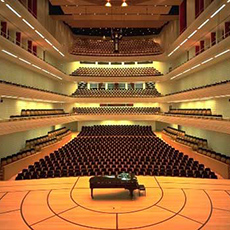
Luzern Switzerland
KKL Luzern
31st January, 2007
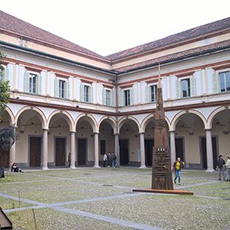
Milano, Italy
Conservatorio di Musica
1st February, 2007
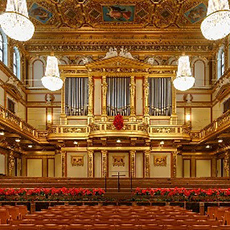
Wien Austria
Musikverein
4th February, 2007
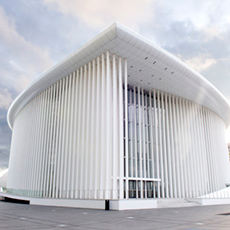
Luxemburg Luxemburg
Luxemburg Philharmonie
6th February, 2007
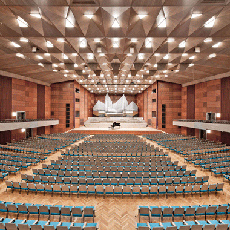
Nurnberg, Germany
Meistersingerhalle
8th February, 2007,
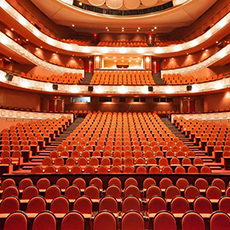
Cairo, Egypt
Opera House
11th February, 2007
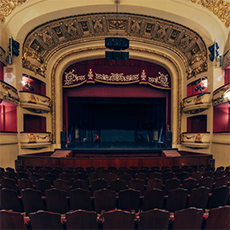
Alexandria, Egypt
Opera House
12th February, 2007

ORCHESTRA

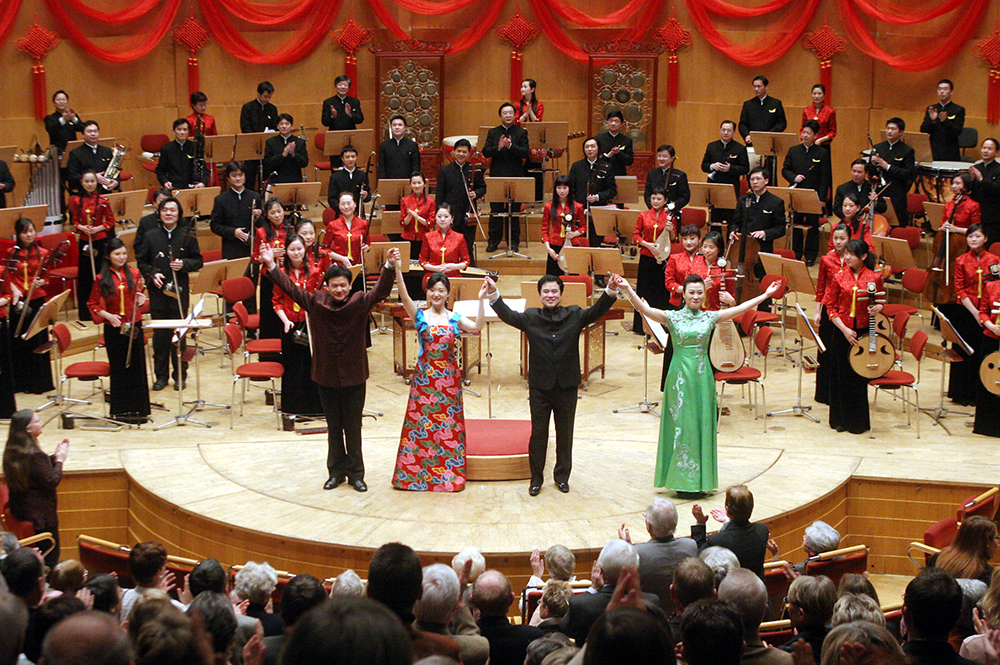
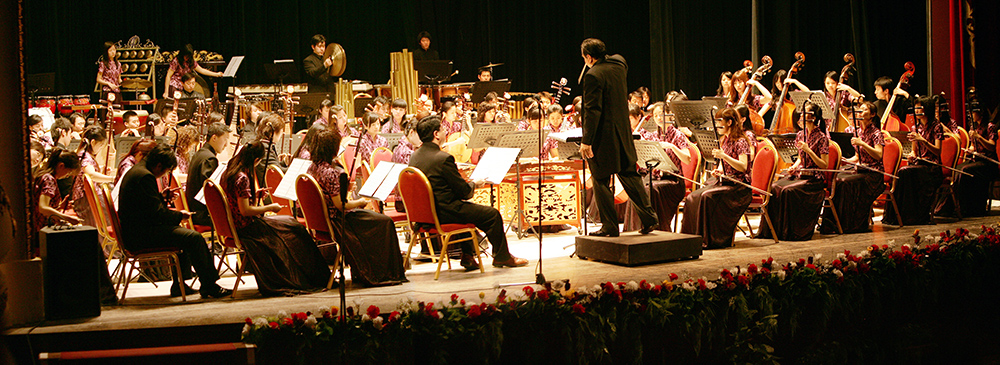
The China National Orchestra Huaxia was founded in 1964, as the successor to the China Conservatory’s traditional orchestra. It has achieved its current widespread renown through many years of development and refinement. The China National Orchestra Huaxia, one of the most active and well-known orchestras in China, is highly professional, and possesses a solid technical foundation. Many of its members have won awards in instrumental competitions both inside and outside China. Teachers, graduate students, and outstanding undergraduates from the China Conservatory are the orchestra’s elite members. In order to promote energy and professionalism, members must meet rigorous entrance criteria before joining the orchestra. The China National Orchestra Huaxia comprises the China National Chamber Orchestra, the China National Plucked Instrument Orchestra, and the China National Bowed Instrument Orchestra.

The orchestra combines ingredients of traditional Chinese music, folk music and Chinese opera, and presents these unique expressions of China’s ancient culture to appreciative audiences worldwide.

Over the years, the China National Orchestra Huaxia has cooperated with many famous musicians. For this performance, the orchestra will be led by renowned Canadian-Chinese conductor Mr. Kuan Nai-chung. Soloists include Mr. Yang Xiuming (Zheng), Mr. Zhang Weiliang (Flute), Mr. An Ruli (Erhu), Ms. Song Fei (Erhu), Mr. Cao Dewei (Erhu) and Mr. Wang Yidong (Percussion).

RESIDENT CONDUCTOR: KUAN NAI-CHUNG
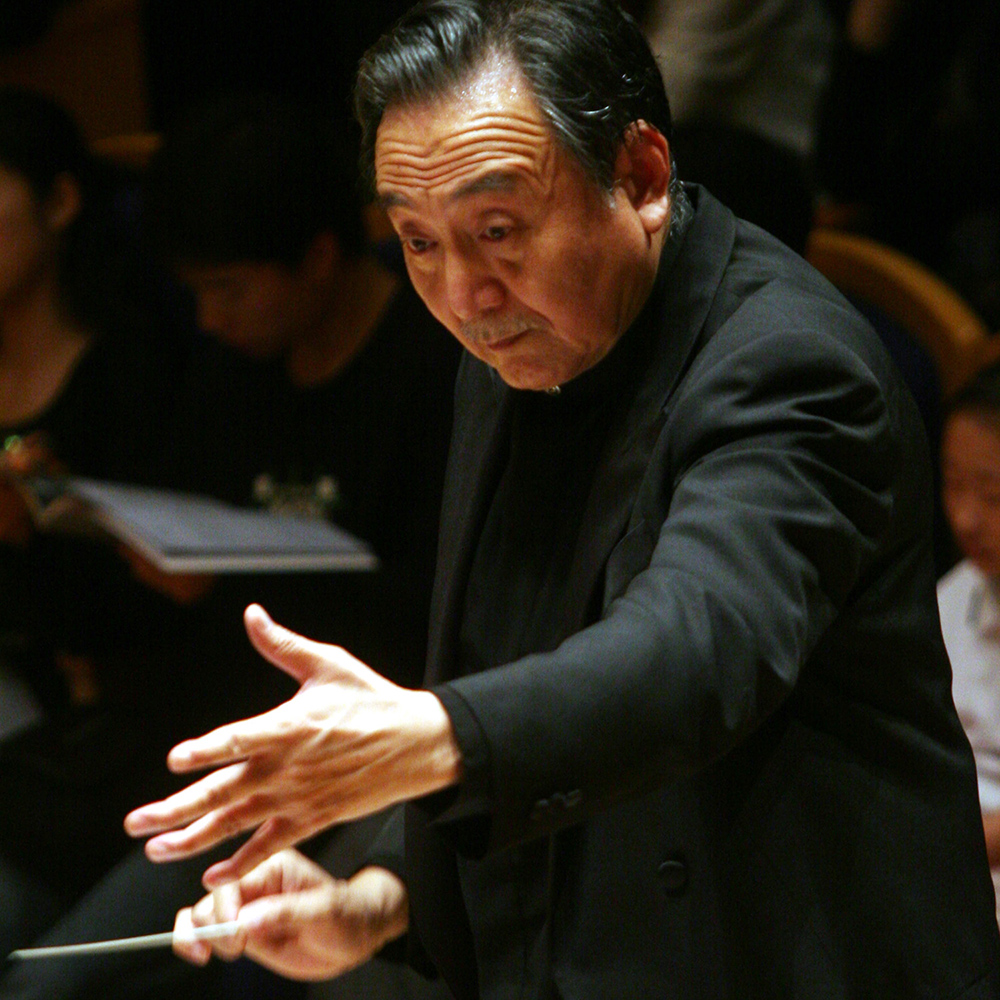
Maestro Kuan was born into a musical family in Beijing in 1937. His father, Kuan Tzu-hsiang, was a well-known violinist in China. Beginning as a child, Kuan Nai-chung received a high standard of musical education from his father, and German pianist Professor Gupuk, a family friend.

Kuan graduated from the Department of Composition at the Chinese Central Conservatory of Music in 1961. Upon graduation, he became the conductor and resident composer of the China Oriental Song and Dance Troupe. In 1979, Kuan moved to Hong Kong, where he worked as the musical director of the Hong Kong Chinese Orchestra between 1986 and 1990.

Over the course of his career, Kuan has at some point conducted nearly all of China’s folk and symphony orchestras. He has recorded albums with the China Broadcasting Traditional Orchestra, China National Traditional Orchestra, China Traditional Orchestra Shanghai, Hong Kong Chamber Symphony Orchestra, Symphony Orchestra of Taiwan, Chinese Traditional Orchestra Singapore, and many more.

During his time as the music director of the Hong Kong Chinese Orchestra, Kuan has placed special emphasis on achieving balance in his artistic ideas, between classical and contemporary, formal and popular, traditional Chinese and Western. He continuously searches for different forms of musical performance, and strives for constant improvement of the orchestra’s skills and expressive power.

In addition to being a conductor, Maestro Kuan is a well-known composer. His compositions include three symphonic works, sixteen concertos, fifteen works for large-scale orchestra, two ballets, three symphonic choruses, various adaptations of classical and folk music, dance music, and musical scores for movies.

Most of Kuan’s early works, such as Journey to Lhasa, Yunnan Customs and How much do you know about Sizhu?, are grounded in realism and rich folk styles. He then turned to explore a variety of musical forms and concepts with works such as Suite of the Taoist Priest Baishi and Hilly Country Image. Following this period, he turned to pure musical expression with works such as the cello concerto Road, his First Erhu Concerto, Fifth Piano Concerto, and Second Symphony.

Kuan moved to Canada in 1994, but continues his partnerships with orchestras in mainland China, Hong Kong and Taiwan. He also continues to compose works in various musical forms.

PROGRAM

China National Orchestra Huaxia

The Grand Chinese New Year Concert 2007

1. Percussion Concerto:
The New Century: The Dragon's Year: The Sun

Composer: Kuan Nai-chung

2. Guzheng & Orchestra: Lang Taosha

Arranger: Gao Weijie
Guzheng: Yang Xiuming

3. The Soaring Dragon

Composer: Zhang Ziqian

4. Dreams in Peking

Composer: Kuan Nai-chung
Erhu: Song Fei

Intermission

5. Legend of a Heroine – Mu Guiying

Composer: Yang Muyun & Zhang Kongfan
Jinghu: Cao Dewei

6. Weeping on Flowers

Composer: Zhang Weiliang
Arranger: Yang Qing
Flute: Zhang Weiliang

7. North-western Suite (Op.3 & Op.4)

Composer: Tan Dun
Tour 2ORCHESTRA: CHINA TRADITIONAL ORCHESTRA ZHEJIANG

DATES AND TICKETS

Amsterdam, Netherlands
Het Concertgebouw
11th February, 2007

Essen, Germany
Philharmonie Essen
12th February, 2007

Bremen, Germany
Stuhr – gut Varrel
15th February, 2007

Hannover, Germany
Congress Centrum
16th February, 2007

Hamburg, Germany
Laiszhalle
17th February, 2007

Copenhagen, Denmark
DR Concert Hall
18th February, 2007

Gothenburg, Sweden
Konserthuset
20th February, 2007

Växjö, Sweden
Konserthuset
21st February, 2007

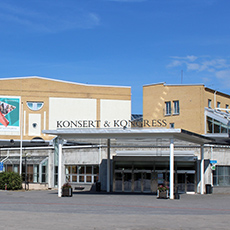
Linköping, Sweden
Konsert & Kongress
22nd February, 2007

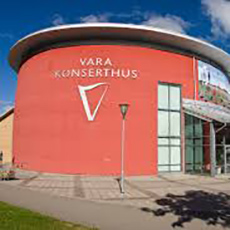
Vara, Sweden
Konserthuset
23rd February, 2007

Stockholm, Sweden
Konserthuset
25th February, 2007

Helsinki, Finland
House of Culture
27th February, 2007

Moscow, Russia
Performing Arts Centre
4th March, 2007

ORCHESTRA

The China Traditional Orchestra Zhejiang is a part of the Zhejiang Song and Dance Theatre, a professional performance group active in a wide range of artistic forms.
The Zhejiang Song and Dance Theatre contains four professional performance groups: a traditional orchestra, a symphony orchestra, a dance group, and a choir. In total, the Theatre has more than 300 members. It is based in Hangzhou, the capital city of Zhejiang province, a modern city of ten million people and an important cultural centre. The Theatre has played an important part in the continuing development of Chinese music, particularly in orchestral arrangements of traditional music.

Established in 1957, the China Traditional Orchestra Zhejiang enjoys a great reputation at home and abroad, and is known for making use of Zhejiang characteristics in its performances. In its first 40 years, it counted among its members many famous artists, such as Zhao Songting (flute), Song Jingting (xiao), QIan Xiaomao (percussion), Huang Huinan (percussion), and Shen Fengquan (erhu). Since the late 1980s, it has been a magnet for graduates of Chinese musical academies.

The orchestra has dedicated itself to researching and developing traditional Chinese music. The orchestra has composed many different pieces, from orchestral works with traditional Zhejiang characteristics (The General’s Winning Command; Bamboo Music), to pieces for flute, erhu, banhu, and other instruments (3, 5, 7; River Village Song; Shaoxing Taipan Air).

The orchestra has also composed many innovative pieces by combining modern techniques with Chinese traditions (Picture of Ancient Hunting, Plum Blossom Lure, Harmony). These works have been well received by Chinese and Western experts, and have been awarded prizes in national and international competitions. They are frequently broadcast on China Central Television (CCTV) and local TV channels.

The China Traditional Orchestra Zhejiang has frequently given special performances for government officials and honored guests, and has represented both China and Zhejiang province at concerts in the United States, Germany, Finland, France, Japan, and Malaysia. In addition to performing, the orchestra has in the past been invited to give master classes around the world.

CHIEF CONDUCTOR: ZHANG GUOYONG

Zhang Guoyong began his study of conducting at the Shanghai Conservatory of Music, under the direction of famous conductor Professor Huang Xiaotong. After graduation in 1983, he remained at the conservatory as a lecturer until 1993, when he was sponsored by the Chinese government for four years of study at the Moscow State Conservatory. While there, he studied under world famous conductor G. Rozhdestvensky.

During his study in Moscow, Zhang conducted and recorded with the Russian State Symphony Orchestra of the Cultural Ministry, The Russian Philharmonic Orchestra, and The Varonesh Symphony Orchestra. In 1997, he obtained a PhD with distinction in music. His graduation concert was highly acclaimed by both the audience and his colleagues. Following the concert, Maestro G. Rozhdestvensky excitedly told critics and reporters, “I have awarded Zhang Guoyong the highest mark in the history of the conducting department at the Moscow Conservatory. He will be able to find his place in any orchestra in the world! ”

Zhang now serves as a professor at the Shanghai Conservatory of Music, is President and Artistic Director of the Shanghai Opera House, Resident Conductor of the Shanghai Symphony Orchestra, and Editor-in-Chief of China’s Opera Magazine. In his multiple roles he has cooperated with many orchestras and well-known musicians both at home and abroad.

In addition to the symphonic repertoire, he has conducted a series of operas, including Rigoletto, Madame Butterfly, Carmen, La Bohème, and Othello; ballets such as Swan Lake, Giselle, and The Nutcracker; cantatas such as Requiem, Song of the Forest, Stabat Mater, Carmina Burana, and the Yellow River Cantata, and other works.

In recent years, Zhang has been invited to conduct concerts in the United States, France, Germany, Switzerland, Russia, Korea, Japan, Hong Kong, Macau, Taiwan and other areas around the world.

CONDUCTOR: LIN YOUSHENG

Lin Yousheng is a winner of the Chinese State Council’s Grant Program for Talented Individuals. He graduated with honors from the Shanghai Conservatory of Music. Currently, he is one of the top national conductors at the Shanghai Opera House, and a part-time professor at Shanghai Tongji University and Shantou University in Guangdong. He has been honored at various music festivals such as the Shanghai Art Festival and Shanghai Spring Music Festival. In 2000, he was named Best Conductor at the 9th International Orchestral Music Festival in Poland. In America, England, Hong Kong, etc, his name has been included on lists of the world’s most famous people.  

He has conducted for the Saarbrücken Staatsoper and China’s National Symphony Orchestra. In China, he has conducted many famous operas such as Turandot, Così Fan Tutte, and La Belle Hélène. He has also visited many countries including Germany, Switzerland, Spain, Poland, Austria, Thailand, and Japan.

PROGRAM

THE GRAND CHINESE NEW YEAR CONCERT 2007

China Traditional Orchestra Zhejiang

1. Kun Opera: The General’s Triumph

Composer: Liu Weijia

2. Ensemble: The Peony Pavilion: “The Dream of Love”

Composer: Wang Tianming

3. Ensemble: Good Jiangnan

Composer: Qu Chunquan

4. Erhu Ensemble: Ditty of the Water Village

5. Dizi Solo: Flying Partridge

Composer: Zhao Songting
Arranger: Qian Zhaoxi
Dizi: Mr. Jiang Guoji

Intermission

6. Chinese String Quintet: Jumping Dragons

Composer: Hu Dengtiao

7. Ensemble: Dreams in West Lake

Composer: Qian Zhaoxi

8. Hulusi (Gourd Pipe): The Countryside Ballad

Composer: Jiang Guoji
Arranger: Liu Yi
Hulusi: Hou Yanqiu.

9. Pipa: Sanliu (plucked string instrument ensemble)

Arranger: Gu Guanren

10. Erhu Concerto: Legend of a Heroine - Mu Guiying

Arrangers: Jiang Xueshang, Liu Yuan
Erhu performers:
Chen Jia (Holland, Germany)
Yu Hongmei (Denmark, Sweden, Finland, Russia)

11. Percussion Ensemble: Dragons Rising, Tigers Leaping

Composer: Li Minxiong
Performer: Butterfly Women’s Ensemble